

Every year, our calendars fill with months set aside to recognize the histories and contributions of different ethnic and cultural communities.
Black History Month in February.
Asian American, Native Hawaiian and Pacific Islander Heritage Month in May.
Hispanic Heritage Month from September 15 through October 15.
Native American Heritage Month in November.
And there are other opportunities throughout the year to intentionally learn about people, stories, cultures, and histories that may not always receive the same attention.
And I know there are people who wonder:
Why do we need specific heritage months?
Why does one group need a month dedicated specifically to them?
Why not simply celebrate everyone?
Why keep drawing attention to our differences?
I understand the question because, for a long time, I quietly wondered the same things.
When your ethnic heritage and culture aren’t a strong part of your own identity, it can be difficult to understand why they matter so deeply to someone else.
For years, my response wasn’t anger or opposition.
Mostly, I just avoided it. Especially Hispanic Heritage Month.
Because celebrating a heritage you don’t feel connected to is complicated.
When You Don’t Feel Like You Belong
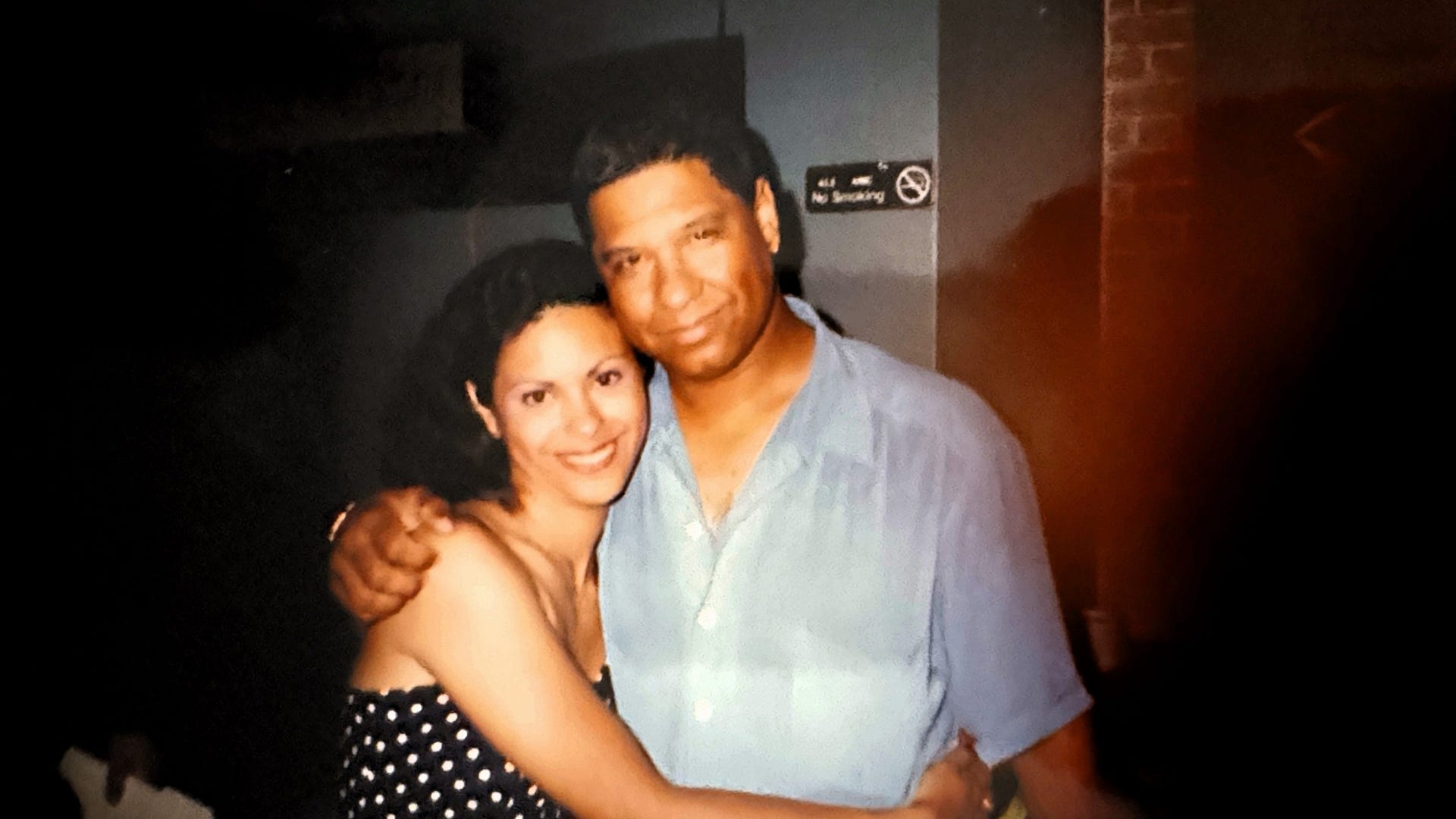
I’m multiethnic. My mom is white and my dad Puerto Rican.
But for most of my life, I didn’t really know what being Puerto Rican meant.
My dad wasn’t around during my childhood. I grew up around my mom’s family in the Midwest. My family, community, school, and church all looked similar…and nothing like me.
My cinnamon skin and coarse curls reflected an ethnicity I felt disconnected to and tried desperately to ignore, hide and avoid.
My mom tried her best to help me connect with that part of my story, but honestly?
I didn’t want to.
Puerto Rican meant being connected to a man who wasn’t around.
A language I didn’t speak.
A culture I didn’t understand.
A distant island I had never known.
Why would I want to lean into something that seemed to highlight all the ways I was already different?
I wanted the opposite.
I wanted to look like everyone else.
Because somewhere along the way, I had developed what felt like a very reasonable plan: If I could look like everyone else, act like everyone else, believe the right things, say the right things and learn the rules of the room well enough, maybe I would finally accomplish the thing I wanted most.
Belonging. Although I didn’t know then that what I was really chasing was acceptance disguised as belonging.
So I adapted.
I learned how to read rooms.
I learned how to minimize the parts of myself that made me stand out.
And for a while, I thought it worked.
Still Not Enough
Eventually, I met my biological father.
Suddenly, I had access to things I hadn’t grown up around.
Latin culture.
Food.
Music.
Family.
History.
People who shared features that looked more like mine.
You would think that would have fixed the disconnect.
It didn’t.
Because knowing where you came from doesn’t automatically teach you how to belong there.
I’d spent years being too brown for white space and now I was too white for these brown spaces.
I didn’t speak Spanish.
I didn’t know all the foods.
I didn’t understand every cultural reference.
I hadn’t grown up with the traditions other people assumed should come naturally to me.
And when people treated cultural identity like a test—You don’t speak Spanish? You’ve never had that? You don’t know this tradition?—every missing piece felt like further proof that maybe I didn’t deserve to claim this part of myself.
So instead of finally feeling at home, I found myself standing in another in-between space, feeling judged, ashamed, and alone.
It became easier to avoid the whole thing.
Which is probably why heritage months didn’t connect with me.
I didn’t understand the value of celebrating something I had spent years trying to escape. And I didn’t appreciate the curiosity and wonder of learning about someone else’s.
God Never Asked Us to Be the Same
The more I began untangling my identity, the more I started noticing something I should have seen all along.
God created diversity.
From the beginning, creation is filled with variety and distinction. And throughout Scripture, God continually works among different nations, languages, communities and cultures.
Even the picture we’re given of eternity isn’t one giant group of indistinguishable people.
Revelation describes people from every nation, tribe, people and language standing before God.
Unity does not require sameness.
Jesus didn’t erase people’s ethnicity when He encountered them.
Think about the Samaritan woman in John 4.
There were enormous cultural, religious and ethnic tensions between Jews and Samaritans. Jesus confronted her assumptions, spoke truth into her life and revealed Himself to her.
But He never told her she needed to become Jewish, or restricted her because of her Samaritan ethnicity.
Following Jesus didn’t require abandoning her culture, people, or traditions.
Too often, Christians unintentionally confuse finding our identity in Christ with pretending the other things God intentionally wove into us no longer matter.
Yes, Jesus becomes the center.
But following Jesus doesn’t diminish our ethnicity or culture.
It doesn’t bleach the color from our skin.
It doesn’t rewrite our ancestry.
We cannot change what God created.
Maybe the invitation isn’t to erase those things.
Maybe it’s to learn to see them rightly.
Who Decided Which Differences Were Acceptable?
Society, however, has spent centuries doing something God never asked us to do.
We’ve compartmentalized people, creating boxes, labels and categories and deciding which differences should be celebrated and which should be suppressed.
Which languages sound educated.
Which hairstyles look professional.
Which foods are normal and which are strange.
Which histories deserve to be taught.
Which stories become part of the larger narrative and which remain footnotes.
And often, the things we dismiss are things we’ve never taken the time to learn about.
It’s easy to reduce another culture to a stereotype when you’ve never listened to its stories.
It’s easy to wonder why representation matters when you’ve always seen yourself represented.
It’s easy to say, Why do we need a month? when your history has never felt absent from the story.
I couldn’t see that for a long time because I chose the easy route, the white route, the one that was prioritized…because I wasn’t ready to embrace the parts of myself that society struggled to accept.
Learning to Praise What I Once Wanted to Change
While writing a chapter for my book proposal, I had to revisit some of those old stories about who I believed I needed to become in order to belong.
I remember how hard it was to overcome the lies I’d held as truth.
For years, I looked at my skin, my hair, my differences and wished God had made me differently. Then one day, while reading Psalms 139, a passage I’d read hundreds of times, I noticed something I’d always skimmed past. Before David speaks to being fearfully and wonderfully made, he says three important words:
“I praise you...”
Praising God for how He created me wasn’t something I’d never even considered. It required more than believing He doesn’t make mistakes in some abstract theological sense.
It meant believing He didn’t make a mistake with me.
My brown skin wasn’t an oversight.
My curls weren’t an inconvenience.
My Puerto Rican heritage wasn’t an awkward detail I needed to minimize.
There was divine intentionality in my creation, even in parts of my story I didn’t yet know how to understand.
And slowly, I stopped asking how I could become more acceptable and started learning to praise God for the person He had already created.
I’m still learning.
I’m still reconnecting.
It’s not always easy or comfortable. But I’m learning to move at my own pace. And I’m watching my kids embrace their own Puerto Rican ethnicity…and in a way, I think it’s making it easier for me to do the same. Maybe because for the first time, I don’t fell alone in this journey.
Maybe That’s Why These Months Matter
Which brings me back to heritage months.
Maybe we don’t all need them for the same reason.
For some, they’re a time to honor generations who came before them.
For others, they’re a time to celebrate traditions, food, music, language and culture they deeply love.
For some of us, they’re an invitation to grow and learn, to notice stories and contributions we may never have encountered or simply overlooked.
And for people like me?
Maybe they can also become a space for healing.
A chance to become curious about the parts of ourselves we’ve kept at a distance.
To stop seeing our differences as liabilities.
To recover stories we didn’t know.
To recognize the beauty in something we once wished away.
This Hispanic Heritage Month, I’m not celebrating because I finally learned how to be fully Puerto Rican.
I’m honoring and continuing to heal because I’m still learning that I don’t have to give up one part of me to embrace the other.
Because heritage isn’t just something we pass down.
It’s something we’re constantly becoming for ourselves and the generations to come.
Keep Reading
If you’re navigating change, letting go, or learning to trust God in a season you didn’t quite feel ready for, keep reading:
Change Is Hard but Necessary
A reflection on grief, growth, and trusting God through life’s unexpected transitions.
Extending Grace for Who You Were
Our hindsight should bring clarity, not condemnation.
Freedom to Love
What Olivia Dean’s concert reminded me about growing older, following Jesus, and loving our neighbor.
If this article encouraged you, provided language for what you’re feeling,
or challenged you, I’d love to hear your story in a comment below.