

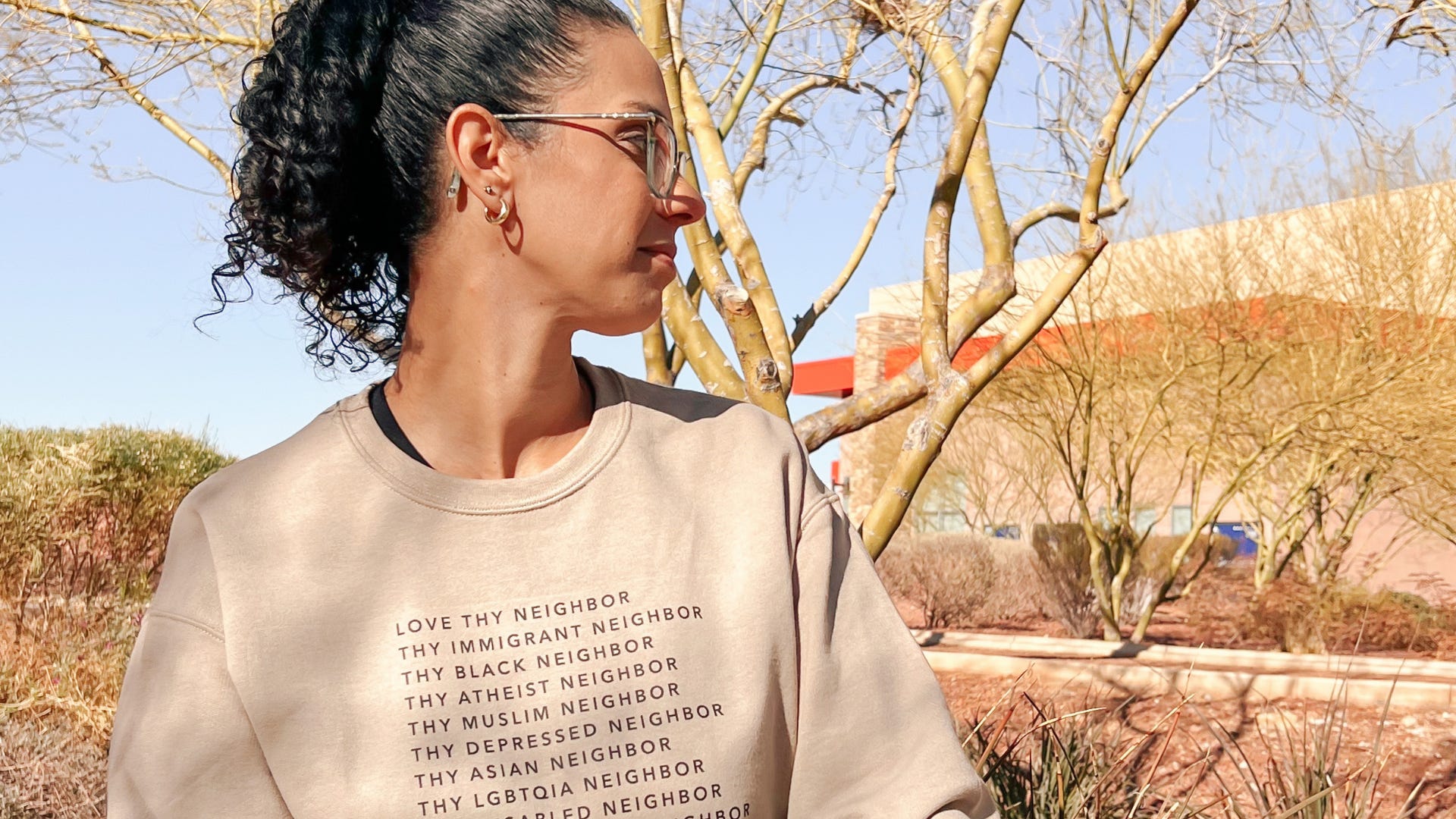
What kind of fruit is your theology producing?
It’s a question I’ve been asking myself lately…whether my convictions are producing a heart reflective of Jesus. Or is my heart so intertwined with my convictions that it’s grown hard and cold toward people.
Recently, I shared a post about loving our neighbors in the Pride community. The responses were swift and harsh…and heartbreaking. Judgment, shame, and intense cruelty, wrapped up in Scripture and weaponized by fellow Christians so committed to truth that they’d lost all sense of love.
As I reflected on those interactions, I found myself realizing something: there was a time I never would have written that post because my convictions wouldn’t have allowed me to lead with compassion.
I grew up in a conservative Christian environment where lines were clear between right and wrong, truth and compromise, biblical and worldly. There was little room for gray. If you weren’t for us, you were against us.
Part of that framework included a strong belief in traditional marriage and biblical sexuality. But somewhere along the way, I began to believe that embracing biblical truth meant rejecting anything…and anyone that appeared to contradict it.
Today, I love listening to someone share their story and learning from their life experience. But back then I wasn’t interested in understanding differing perspectives, hearing about unfamiliar life circumstances, or learning from others. And while I wasn’t as outspoken back then, I held this belief tightly.
Looking back, I realize my convictions weren’t the problem. My heart was.
The Holy Spirit eventually began exposing something in me that I couldn't see on my own. The beliefs and ideologies I’d trusted to be based on Scripture were actually rooted in a fear of curiosity, empathy, and compassion. Rather than digging into the Bible myself, I’d trusted the leadership and direction of pastors and church leaders to decide that preserving Truth was greater than loving people.
I had become more concerned with being right than becoming like Jesus, and I didn’t know how to fix it or where to start. So I prayed…
“Lord, help me see people the way You see them, and help me love them like you do.”
I wasn’t asking Him to change my convictions.
I was asking Him to change my heart.
One of the ways He answered that prayer came through an unexpected friendship.
Years ago, I became friends with another parent at my children’s school. We connected through our kids and worked together as PTO moms. Eventually, their family moved across the country, but we stayed connected through social media.
Over time, her posts revealed that she was an atheist and that she and her teens were navigating conversations around gender identity, sexuality, trauma, and belonging. Their experiences were so different from my own that I often found it difficult to relate and (full transparency) the topics made me uncomfortable to read.
There were moments when I considered unfollowing her.
I wondered if by simply following her account, I was somehow affirming things that went against my personal convictions.
But I stayed.
I read.
I learned.
Reading her posts forced me to confront perspectives I had spent most of my life avoiding.
• I paid attention to the stories she shared about pain, rejection, bigotry, and judgement.
• I listen to the harsh reality of how Christians had wounded her and her family.
• I fought the urge to respond or defend a perspective.
What surprised me most was that listening didn’t weaken my convictions.
It strengthened my compassion.
For the first time, I wasn’t looking at an issue.
I was seeing at a person.
A person created in the image of God.
A person carrying deep wounds.
A person trying their best as they struggle through life.
A person with a story.
A person Jesus loves.
Over time, something changed in me.
Kinda like the Grinch, I noticed my heart starting to grow.
The more I listened, the softer and warmer it became.
Suddenly being right wasn’t as important as being like Jesus, not just with her, but with people in general.
Years later, she posted a comment that I’ve never forgotten.
“You have always been one of those who struck me as following Jesus' teachings more than a church's teachings. The kindness and inclusion you showed to my child was life changing for us.”
Those words still sit heavily with me. At a time when I was reexamining what I had been taught, testing long-held beliefs against Scripture, and learning to separate human ideology from the heart of Jesus, she’d seen Jesus in me.
Learning to listen had changed me. Empathy had begun to open the door for me to consider someone else’s experience. So when we eventually began to dialogue, I wasn't defending a position. I was responding from my heart.
Throughout that season, I spent a lot of time studying the life of Jesus—how He lived, how He welcomed, how He responded, how He listened, how He spoke, how He saw people, and how He loved them. It’s a discipleship study rhythm I continue to practice still. And I decided that if I was going to see and love like Jesus, I had to follow His lead with ALL people, not just the ones that made me comfortable.
That friendship taught me that conviction and compassion can coexist.
I was afraid extending compassion would cost me my convictions.
The truth is, it’s drawing me closer to the heart of Jesus.
Growing up, I had absorbed the idea that extending compassion meant compromising truth. But Jesus was never concerned that compassion would dilute conviction.
He embodied both.
And so should I.
I’ve heard it said that intent doesn’t diminish impact.
And for a long time, I believed defending Truth was more important than considering the impact of my words and actions. But, if our commitment to Truth comes at the expense of someone understanding that Jesus loves them, died for them, and wants a relationship with them, then we’ve missed the point completely.
Compassion doesn’t require us to compromise personal convictions.
Kindness doesn’t demand agreement.
Empathy doesn’t require endorsement.
So I’ll leave you with the same questions I’ve been asking myself:
What kind of fruit is your theology producing?
Has it made you more compassionate?
More curious?
More willing to listen?
More like Jesus?
Or has it made you colder, harder, and more convinced of your own righteousness?
Following Jesus has never required us to abandon conviction.
But it does require us to surrender our contempt.
And perhaps that’s where a change of heart begins.

Hi! I’m Torrie. Thanks for stopping by.
If this article encouraged you, provided language for what you’re feeling,
or challenged you, I’d love to hear your story in a comment below.
If you are not familiar with The And Campaign, I encourage you to check them out. They abide by compassion and conviction. So helpful in this journey. Also the Revoice organization -- sexual minorities doing their best to live by historic Christian ethics and encouraging one another. Their annual conference is coming up in a week or two.