


Have you ever been hurt or afraid, so you built a wall around yourself?
Maybe it was around your heart, hoping to keep it from being broken again.
Maybe it was around your ideas because they had been misunderstood or dismissed.
Maybe you built a wall around your image, carefully controlling what others could see so no one would discover the “real” you.
We build walls because we believe they will protect us.
And for a while, they might.
They give us distance from whatever hurt us. They separate what feels familiar from what feels threatening. They offer a sense of security when everything around us feels uncertain.
But sometimes the walls we build for protection slowly become prisons.
My husband and I recently went to see Hadestown at the movies. We love musicals, and since I missed the live production when it came through our city, I was excited to see the proshot version. Bringing Broadway to people who may never be able to experience live theater feels long overdue…but I digress.
I knew the musical was based on the tragic Greek myth of Orpheus and Eurydice, so naturally, I expected to leave thinking about the love story.
But that’s not what stayed with me.
I left thinking about a wall.
And I continued thinking about it for the next several days.
Why Do We Build the Wall?
In the first act, the workers of Hadestown sing about why they build the wall.
“The enemy is poverty
And the wall keeps out the enemy
And we build the wall to keep us free
That’s why we build the wall
We build the wall to keep us free.”
The wall promises protection and security. The workers believe their labor is preserving their freedom.
But as the story unfolds, it becomes clear that the wall isn’t creating freedom.
It is keeping them trapped.
They work endlessly to build the very thing that imprisons them, convinced their safety depends on making it stronger.
I couldn’t stop thinking about how easily we can do the same thing.
Our walls may not be made of stone, but we build them around what we believe. Around our understanding of truth. Around the ideas we are willing to consider and the voices we are willing to hear.
Then we begin building them around people.
We decide who deserves grace, whose pain should move us, and who is safe enough to love. On one side are the people we understand, trust, and agree with. On the other are the people we have labeled dangerous, misguided, sinful, or simply too different.
We tell ourselves the wall is protecting something important.
But what if it is trapping us?
What if the wall around our truth keeps us from recognizing something we may have misunderstood? What if the wall around our convictions keeps us from listening? What if the wall around our faith keeps us from offering the same grace, empathy, compassion, and love Jesus consistently offered others?
Somewhere along the way, many Christians began treating faith as something that needed to be protected.
Protected from questions.
Protected from unfamiliar cultures.
Protected from different interpretations.
Protected from people whose lives or experiences might challenge what we have always believed.
Maybe that is part of why Jesus so often found Himself in conflict with the Pharisees.
They weren’t trying to abandon God. They believed the boundaries they defended protected faithfulness and holiness. They had clear understandings of who was clean and unclean, who belonged and who did not, and which lines faithful people should never cross.
But Jesus kept crossing them.
In Matthew 15, a Canaanite woman begs Jesus to heal her daughter. Culture, ethnicity, and religious history place her firmly on the outside. Even the disciples want Jesus to send her away.
But the woman continues reaching across the wall. Jesus recognizes her great faith and heals her daughter. The person the disciples wanted dismissed becomes an example of faith.
The early Church continued learning to live beyond the walls Jesus dismantled.
Paul later wrote:
“There is neither Jew nor Gentile, neither slave nor free, nor is there male and female, for you are all one in Christ Jesus.”
—Galatians 3:28
The walls around culture, religious belonging, social status, and gender were coming down.
Jesus did not build walls around the Kingdom. He tore down the walls that kept people from seeing how far God’s grace could reach.
So why are we so quick to rebuild them?
Maybe we are afraid listening means agreeing. That curiosity means compromise. That crossing a bridge betrays the people who have worked hard to maintain and stand guard at the wall.
Maybe we believe God needs us to defend Him.
But God does not need our protection.
When the Wall Starts to Come Down
Following Jesus may require us to question some of the walls we once believed were protecting our faith.
Recognizing that a wall has become a prison is one thing.
Finding the courage to leave it is another.
That is where the second act of Hadestown stayed with me.
Orpheus is given the opportunity to lead Eurydice out of Hadestown. He must walk ahead of her and trust that she is following, even though he cannot see her. He knows the instructions. He wants to believe the promise. He begins walking toward freedom.
Then doubt sets in.

Hermes warns:
“The dog you really got to dread
Is the one that howls inside your head.”
That voice grows louder with every step.
What if Eurydice isn’t behind him?
What if he has been deceived?
What if he keeps walking and discovers he was wrong?
Orpheus wants to do the right thing, but doubt becomes louder than the confirmation from Eurydice’s that she’s right there.

Hermes later sings:
“I’ll tell you where the real road lies
Between your ears, behind your eyes
That is the path to Paradise
Likewise, the road to ruin.”
The wall may be physical in Hadestown, but the final barrier Orpheus faces is the walls within his own mind.
I wonder if the same thing happens when we begin dismantling our walls.
We recognize that an assumption may have been wrong. We begin listening to people we once dismissed. We sense Jesus inviting us across a cultural, religious, or social divide.
Then the howling begins.
What if you’re wrong?
What if this is compromise?
What will people think?
What might you lose if you keep walking?
Sometimes the wall is no longer standing in front of us. It is living between our ears and behind our eyes.
And when doubt becomes louder than truth, we turn around.
Show the Way the World Can Be
But Hadestown also offers another possibility.
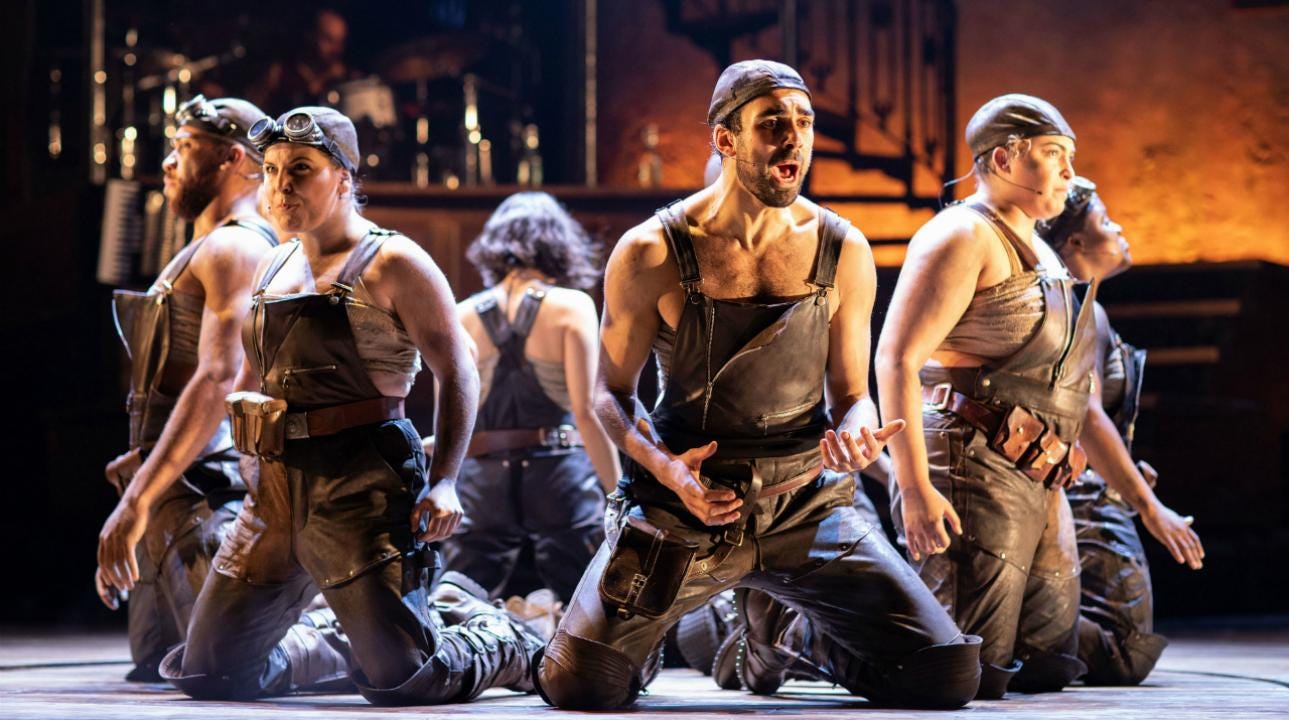
“Show the way so we can see.
Show the way the world can be.
If he can do it so can she.
If she can do it so can we.”
The builders of the wall begin believing change is possible, and maybe there really is a way toward freedom.
One person’s courage can help another person imagine a different way.
One person crosses a divide, and someone watching realizes the distance may not be impossible after all.
One person questions an inherited assumption, listens with humility, or chooses compassion over suspicion and creates space for someone else to do the same.
That is the power of community.
When doubt begins howling, we need people beside us who can remind us why we started walking. People who can remind us what is true when fear tempts us to return to the familiar prison behind us.
Maybe even comparing Greek mythology and the Bible is a small example of tearing down a wall.
Hadestown is not Scripture, but its story can still help us notice something about ourselves. It can ask questions that send us back to the Gospels with new eyes.
We build walls because we’re afraid.
We keep building because the walls make us feel protected.
Then, even when we begin tearing them down, doubt tries to convince us to turn back.
But Jesus continues showing us another way—a way beyond the walls we have built around truth, faith, culture, gender, grace, and love.
Perhaps the question is not only whether we are willing to tear down our walls.
It’s whether we will trust Jesus enough to keep walking when the doubt inside our heads tells us to turn around.
And whether we will walk together, showing one another the way the world can be.
Reflection Questions
What wall have you built for protection that may now be limiting what you are willing to hear, consider, or love?
When you imagine dismantling that wall, what doubt or fear begins “howling” inside your head?
Who helps you keep walking toward the freedom, grace, and unity Jesus modeled?
Keep Reading
If this essay stirred something in you, these continue to conversation.
Is My Allegiance Divided?
Who Are You Without Labels?

If this article encouraged you, provided language for what you’re feeling,
or challenged you, I’d love to hear your story in a comment below.
I love this!